Scale of Solar Flares:
* C-Class: These are the smallest flares and generally have little impact on Earth.
* M-Class: These flares are more powerful than C-class flares. They can cause minor radio blackouts and some disruptions to power grids.
* X-Class: These are the most powerful flares and can cause severe radio blackouts, disruptions to GPS and satellite communications, and even damage to satellites.
* Superflares: While we haven't observed a superflare from our Sun, they are thought to be possible. These events would be vastly more powerful than even X-class flares and have the potential to cause widespread damage on Earth.
Energy Release:
The energy released by a solar flare can be measured in Joules.
* A small C-class flare can release about 10^23 Joules.
* A large X-class flare can release up to 10^26 Joules.
* A superflare is estimated to release 10^32 Joules.
Size and Duration:
The size of a solar flare is difficult to measure directly. However, they are generally considered to be thousands of kilometers across. The duration of a flare can vary from minutes to hours.
Impact on Earth:
While the Sun's explosions are impressive, they are thankfully very far away from Earth. However, the energy from solar flares can reach our planet and can cause various disruptions:
* Radio blackouts: Flares can disrupt radio communications.
* GPS disruptions: Flares can interfere with GPS signals.
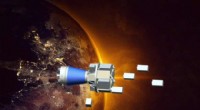
* Satellite damage: Large flares can damage or disable satellites.
* Power grid disruptions: Flares can induce powerful electrical currents in power grids, leading to outages.
* Auroras: Powerful flares can cause spectacular auroras (northern and southern lights).
Monitoring Solar Flares:
Scientists continuously monitor the Sun for solar flares and other space weather events. The Space Weather Prediction Center (SWPC) of the National Oceanic and Atmospheric Administration (NOAA) provides forecasts and warnings of solar flares and their potential impact on Earth.