Here's how it works:
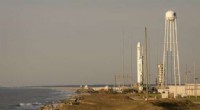
* Rocket Propulsion: Rockets use a process called combustion to generate thrust. They burn fuel and oxidizer, creating hot gas that is expelled out of the nozzle. This expulsion creates a force that pushes the rocket upwards, overcoming gravity.
* Stages: Large rockets often have multiple stages. Each stage is essentially a self-contained rocket that ignites and burns fuel until it runs out. Then, the stage detaches, and the next stage ignites to continue the ascent.
* Trajectory: The rocket follows a carefully calculated trajectory, which is determined by factors like the desired orbit, payload weight, and launch location.
* Orbit: Once the rocket reaches the desired altitude and speed, the spacecraft separates and enters orbit around the Earth (or another celestial body).
Here are some additional details:
* Types of Rockets: There are many different types of rockets, including solid-fuel rockets (like the Space Shuttle's solid rocket boosters) and liquid-fuel rockets (like the Saturn V rocket that launched Apollo missions).
* Launch Sites: Rockets are typically launched from specially designed launch sites, often located near the equator to take advantage of Earth's rotation.
So, while it's common to say a "spacecraft launches," the actual process involves a rocket lifting the spacecraft off the ground and propelling it into space.