* Planet: A planet is a celestial body that orbits a star. It is massive enough for its own gravity to pull it into a nearly round shape and has cleared the neighborhood around its orbit.
* Solar System: A solar system consists of a star and all the objects that orbit around it. This includes planets, moons, asteroids, comets, and other debris. Our solar system is centered around the Sun.
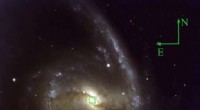
* Galaxy: A galaxy is a massive collection of stars, gas, dust, and dark matter held together by gravity. Galaxies can be spiral, elliptical, or irregular in shape. Our solar system is located in the Milky Way galaxy.
* Universe: The universe is the totality of everything that exists – all matter, energy, space, and time. It includes all the galaxies, solar systems, stars, and planets within it.
Here's a simple analogy:
* Imagine a grain of sand (that's a planet).
* Now imagine a beach full of sand (that's a solar system).
* Now imagine a vast desert filled with many beaches (that's a galaxy).
* Finally, imagine the entire Earth, with all its deserts, oceans, and continents (that's the universe).
In essence, the relationship is a hierarchy:
* Universe is the largest entity, containing everything.
* Galaxies are vast collections of stars and other objects within the universe.
* Solar Systems are smaller systems within a galaxy, containing stars and their orbiting bodies.
* Planets are individual celestial bodies that orbit a star within a solar system.