Here's a breakdown:
* Far from any significant masses: In deep space, far from planets, stars, or galaxies, the gravitational field strength is very weak, approaching zero.
* Near celestial objects: The strength of the gravitational field increases significantly closer to massive objects like planets, stars, or black holes.
* Earth's gravitational field: Here on Earth, the gravitational field strength is about 9.8 m/s². This means that every second, an object's downward velocity increases by 9.8 meters per second. However, this value decreases as you move further away from Earth.
To understand the gravitational field strength in a specific location in space, you need to consider:
* The mass of all the objects nearby: The more massive an object is, the stronger its gravitational pull.
* The distance to those objects: The closer you are to a massive object, the stronger its gravitational pull.
Here are some examples:
* International Space Station: The ISS orbits at a distance of about 400 kilometers above Earth. The gravitational field strength there is about 8.7 m/s², slightly weaker than on the surface.
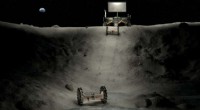
* Moon: The Moon's gravity is about 1/6th of Earth's, due to its smaller mass.
In summary, the gravitational field strength in space is a dynamic quantity, constantly changing depending on the location and the distribution of mass in the universe.