1. Initial Cloud: The solar nebula started as a vast, diffuse cloud of gas and dust.
2. Gravity's Pull: Within this cloud, there were small regions of slightly higher density. These denser regions had a stronger gravitational pull than the surrounding areas.
3. Accretion: As these denser regions attracted more material, they grew larger and their gravitational pull increased further. This caused a snowball effect, drawing in more and more matter from the surrounding cloud.
4. Rotation and Flattening: As the cloud contracted, conservation of angular momentum caused it to spin faster. This rotation, combined with the inward pull of gravity, flattened the cloud into a disk shape.
5. Central Concentration: At the center of this spinning disk, the gravitational pull was strongest, leading to the formation of a massive, dense protostar – the precursor to our Sun.
Other contributing factors:
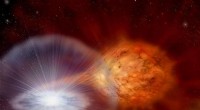
* Supernova Shockwaves: It's theorized that a nearby supernova explosion might have triggered the initial collapse of the solar nebula, providing the energy needed to overcome the cloud's internal pressure.
* Magnetic Fields: Magnetic fields within the cloud might have also played a role in guiding and concentrating the collapsing material.
In essence, gravity was the dominant force driving the contraction of the solar nebula. This process, known as gravitational collapse, led to the birth of our Sun and the planets around it.