* Time Scales: Star formation is a very slow process, taking millions of years. Our human lifespans are far too short to observe such events directly.
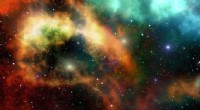
* Distance: Stars form within vast clouds of gas and dust called nebulae, which are often located extremely far away. Even with powerful telescopes, the details of star formation are difficult to discern.
* Observational Challenges: Observing the process of a star forming involves capturing the subtle changes in brightness, temperature, and structure of the collapsing gas and dust cloud. This requires incredibly sensitive and sophisticated instruments.
What we can do:
While we can't directly observe the entire process, we can:
* Observe different stages: Astronomers have captured snapshots of various stages of star formation, giving us a detailed understanding of the process. They can see the collapse of the gas and dust, the formation of protostars, and the eventual ignition of nuclear fusion.
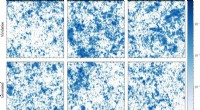
* Simulate star formation: Computer models based on physical laws can simulate the formation of stars and help us understand the processes involved.
* Track individual stars: We can observe young stars and their evolution over time, which gives us clues about their formation history.
So, while we haven't seen a star form from start to finish, we have a very good understanding of the process thanks to a combination of observations, simulations, and inferences from studying existing stars.