1. Telescopes:
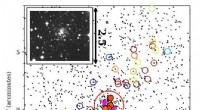
* Optical Telescopes: These are the most common type and capture visible light from distant objects. They come in various sizes, from small backyard telescopes to massive observatories like the Keck Observatory.
* Radio Telescopes: These telescopes detect radio waves, which can penetrate dust clouds and reveal hidden structures in galaxies and nebulae (birthplaces of stars and planets). Examples include the Very Large Array (VLA) and the Atacama Large Millimeter/submillimeter Array (ALMA).
* Infrared Telescopes: Infrared light can penetrate dust clouds, allowing scientists to study star and planet formation hidden within. Examples include the James Webb Space Telescope and the Spitzer Space Telescope.
* X-ray Telescopes: These telescopes detect high-energy X-rays emitted by hot gas in galaxies and young stars, providing insights into the energetic processes at play. Examples include the Chandra X-ray Observatory and XMM-Newton.
2. Spacecraft:
* Orbiting Observatories: Like Hubble Space Telescope, these telescopes provide high-resolution images and data from above Earth's atmosphere, avoiding atmospheric distortions.
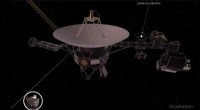
* Space Probes: These spacecraft travel to specific locations in the solar system or beyond to gather detailed data on planets, moons, asteroids, and comets. Examples include the Voyager probes, Cassini, and Juno.
3. Computer Models and Simulations:
* Scientists use sophisticated computer programs to simulate the formation of galaxies and planetary systems, helping them test their theories and understand complex processes.
4. Analysis of Light and Spectra:
* By analyzing the light from distant objects, scientists can determine their composition, temperature, and motion. This information provides clues about their formation and evolution.
5. Meteorites and Samples:
* Studying meteorites that fall to Earth can provide insights into the composition and formation of our solar system, including the early stages of planet formation.
6. Laboratory Experiments:
* Scientists conduct experiments in labs to recreate conditions found in space, such as the formation of interstellar dust or the interaction of gas clouds.
These tools and techniques work together to give scientists a comprehensive understanding of how galaxies and planets form. Each tool offers a unique perspective, allowing scientists to piece together the complex puzzle of cosmic evolution.