Here's a breakdown:
* Gravity: A fundamental force of attraction between any two objects with mass. The more massive an object, the stronger its gravitational pull.
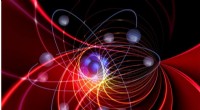
* Curved Path: Objects in orbit don't travel in a straight line. Instead, they follow a curved path, influenced by the gravitational pull of the larger object they're orbiting. This path can be circular, elliptical, or even more complex.
Examples of Orbits:
* Planets around Stars: Our Earth orbits the Sun, and other planets in our solar system follow similar paths.
* Moons around Planets: Earth's moon orbits our planet, and other planets in our solar system have their own moons.
* Satellites around Earth: Artificial satellites, like the International Space Station, are launched into orbit around Earth.
* Stars in Galaxies: Stars in galaxies orbit around the galactic center, which contains a supermassive black hole.
Key Features of Orbits:
* Orbital Period: The time it takes an object to complete one full orbit.
* Orbital Velocity: The speed an object travels while in orbit.
* Orbital Altitude: The distance between an object in orbit and the object it's orbiting.
Understanding orbits is crucial in many fields, including astronomy, space exploration, and even understanding the formation of planets and stars.