1. Initial Conditions:
* The Big Bang: The universe started as a hot, dense state. As it expanded and cooled, gravity started pulling matter together.
* Dark Matter: A mysterious substance called dark matter is believed to make up the majority of the universe's mass. It doesn't emit light but exerts gravitational force, playing a significant role in galaxy formation.
2. Gravitational Collapse:
* Clumps of Matter: Gravity attracts matter, causing small, dense clumps to form within the expanding universe.
* Protogalaxies: These clumps grow through ongoing accretion (gathering more matter) and merge with other clumps, eventually forming larger structures called protogalaxies.
3. Star Formation:
* Dense Gas Clouds: Within protogalaxies, dense clouds of gas and dust form due to gravitational collapse.
* Stars Igniting: When these clouds become dense enough, nuclear fusion ignites at their core, creating stars.
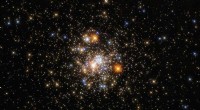
* Star Clusters: Stars often form in clusters within these dense regions.
4. Galaxy Evolution:
* Gravity's Influence: Gravity continues to influence the galaxy's structure, causing the stars to orbit the galactic center and form spiral arms.
* Galactic Collisions: Galaxies can collide and merge, resulting in larger, more massive galaxies.
* Black Holes: Supermassive black holes form at the centers of many galaxies, playing a role in regulating galactic evolution.
In summary: Gravity is the driving force behind galaxy formation, pulling matter together to create dense clouds that give birth to stars. The gravitational interactions between stars and dark matter shape the structure and evolution of galaxies over billions of years.