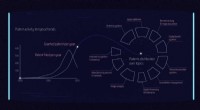
* The Sun's Motion: Our Sun is a star, and it does move. It's orbiting the center of the Milky Way galaxy, taking around 250 million years to complete one orbit. It's also moving within the galaxy's disk, along with all the other stars.
* Other Stars' Motion: All stars in the Milky Way galaxy, including the Sun, are moving in relation to one another. Some stars are closer to the galactic center and move faster than the Sun. Others are farther away and move more slowly.
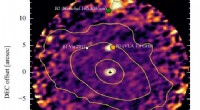
* Apparent Motion: From our perspective on Earth, stars appear to be fixed in the sky. However, this is an illusion. Over very long periods (thousands of years), we can see that stars slowly shift their positions due to their movements. This is called proper motion.
So, the short answer is that stars move, just like the Sun, but their movements are slow and difficult to detect on human timescales.