Observable Features:
* Brightness: Galaxies that are exceptionally bright, either in total luminosity or in specific wavelengths (like radio waves or X-rays), are often studied.
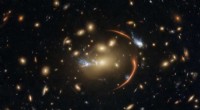
* Unusual Shape and Structure: Spirals, ellipticals, and irregular galaxies all come in a vast array of sizes and shapes. Galaxies with unique features like unusual spiral arms, large central bulges, or complex interactions with other galaxies stand out.
* Active Galactic Nuclei (AGN): Galaxies with supermassive black holes at their centers that are actively feeding can produce tremendous amounts of energy, making them appear very bright and distinct.
* Proximity to Earth: Galaxies that are relatively close to our own Milky Way galaxy are easier to study in detail.
* Historical Significance: The first galaxies ever discovered, or galaxies that have been particularly crucial in the development of our understanding of the universe, often hold a special place in our collective memory.
Scientific Significance:
* Galaxies that offer insights into galaxy formation and evolution: Studying a variety of galaxies, from young to old, allows us to piece together how galaxies evolve over time.
* Galaxies that test fundamental physics: Some galaxies exhibit extreme phenomena like supermassive black holes or massive starbursts, which allow us to test theories of gravity, relativity, and particle physics.
* Galaxies that harbor life: While we haven't discovered life outside of Earth yet, the search for habitable planets and potential signs of life focuses on galaxies that are most similar to our own.
Cultural Significance:
* Galaxies that are featured in popular culture: Some galaxies are featured in science fiction, art, and other forms of media, which can spark public interest and curiosity.
* Galaxies with interesting names: Galaxies with catchy or evocative names, like the "Whirlpool Galaxy" or "Sombrero Galaxy", can be more memorable and easily accessible to the general public.
Ultimately, what makes a galaxy "popular" is a combination of its scientific, cultural, and aesthetic significance. The more these factors overlap, the more likely a galaxy is to capture our attention and inspire our imaginations.