1. The Star's Evolution:
* Main Sequence: A star like our Sun spends the majority of its life fusing hydrogen into helium in its core, generating energy and radiating light. This is called the "main sequence" phase.
* Red Giant: As the star runs out of hydrogen fuel, it starts to fuse helium into heavier elements. This causes the star to expand greatly, becoming a red giant.
2. The Star's Instability:
* Shell Fusion: The red giant's core becomes unstable, and a shell of hydrogen around the core ignites, creating a thermal pulse that pushes outer layers of the star outward.
* Mass Loss: The outer layers of the star are expelled into space in a series of violent pulses, forming a cloud of gas and dust. This process can continue for thousands of years.
3. The Planetary Nebula Formation:
* Ultraviolet Radiation: The remaining core of the star, now a hot, dense white dwarf, emits intense ultraviolet radiation. This radiation ionizes the ejected gas, causing it to glow.
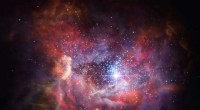
* Beautiful Shapes: The ionized gas expands and interacts with the surrounding interstellar medium, leading to the formation of complex and beautiful shapes, often resembling rings, bubbles, or even hourglass forms.
4. Fading Away:
* Short-lived Beauty: Planetary nebulae are relatively short-lived phenomena, lasting only a few tens of thousands of years.
* Dissipation: Eventually, the gas and dust of the nebula dissipates, leaving behind the white dwarf – the stellar remnant that will slowly cool over billions of years.
Key Points:
* Planetary nebulae are not related to planets, but were named so because early astronomers mistook their round shapes for planets through their telescopes.
* These nebulae are crucial for the recycling of elements in the Universe. They enrich the interstellar medium with heavier elements, which are then used to form new stars and planets.
Example: The famous Ring Nebula (M57) is a classic example of a planetary nebula.