1. Wavelength:
* Optical telescopes: Collect visible light, a small portion of the electromagnetic spectrum with wavelengths ranging from 400 to 700 nanometers.
* Radio telescopes: Collect radio waves, a much longer wavelength portion of the electromagnetic spectrum, typically ranging from millimeters to meters.
2. Detectors:
* Optical telescopes: Use detectors like CCDs (charged-coupled devices) or photographic plates that are sensitive to visible light.
* Radio telescopes: Use sensitive receivers that amplify the weak radio signals from space. These receivers often require cryogenic cooling to minimize noise.
3. Size and Design:
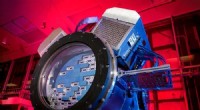
* Optical telescopes: Often have large, reflective mirrors to focus light onto a detector. They are usually housed in domes to protect them from weather and light pollution.
* Radio telescopes: Can be very large, sometimes spanning hundreds of meters in diameter. They often use a dish-like shape to focus radio waves onto a receiver. They can be fixed to the ground or mounted on movable platforms.
4. Atmosphere:
* Optical telescopes: Are significantly affected by the Earth's atmosphere, which absorbs and scatters visible light. They often operate at high altitudes or in space to minimize atmospheric interference.
* Radio telescopes: Are less affected by the Earth's atmosphere, as radio waves penetrate the atmosphere more readily. However, they can still be affected by radio interference from human sources.
5. Objects they observe:
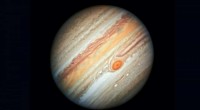
* Optical telescopes: Primarily observe objects that emit visible light, such as stars, galaxies, planets, and nebulae.
* Radio telescopes: Observe objects that emit radio waves, such as pulsars, supernova remnants, active galactic nuclei, and the cosmic microwave background radiation.
6. Advantages and Disadvantages:
* Optical telescopes: Provide high-resolution images of objects in visible light. However, they are limited by atmospheric conditions and the fact that many objects in space do not emit visible light.
* Radio telescopes: Can penetrate through clouds and dust, allowing them to see objects that are obscured in visible light. They can also detect objects that emit very little visible light. However, radio images typically have lower resolution than optical images.
In summary: Optical telescopes and radio telescopes are complementary tools that provide different views of the universe. They both contribute to our understanding of the cosmos, albeit in very different ways.