* Precession of the Equinoxes: Earth's axis of rotation slowly wobbles like a spinning top. This wobble, called precession, takes about 26,000 years to complete one cycle. Over time, this changes the apparent position of stars in the sky.
* Earth's Movement: Our planet's orbit around the sun and its rotation on its axis cause the stars to appear to shift slightly over the course of a year. This effect is more subtle than precession but still noticeable over long periods.
* Light Pollution: Modern cities and urban areas emit significant light pollution, obscuring faint stars that ancient people would have easily seen. This makes it difficult to discern fine details in constellations.
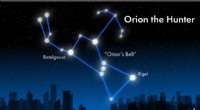
Therefore, constellations as we know them today are a snapshot in time, and the patterns would have been slightly different for ancient civilizations.
Some Examples:
* Ursa Major: The Big Dipper, part of Ursa Major, was a more prominent feature in the sky thousands of years ago. It's shifted slightly due to precession, and will continue to change over time.
* Polaris: Our current North Star, Polaris, hasn't always been the star closest to the North Celestial Pole. Due to precession, the position of the North Star changes over centuries.
While we can't see the exact same patterns as ancient people, studying their star maps and understanding precession allows us to reconstruct their view of the sky. This helps us understand their beliefs, navigation methods, and cultural practices.