Here's a more detailed explanation:
* Gaseous Composition: Jupiter's atmosphere is incredibly thick and deep. It's composed primarily of hydrogen and helium, with trace amounts of other gases like methane, ammonia, and water vapor.
* Fluid Interior: Beneath the visible atmosphere, the pressure and temperature increase dramatically. The gas becomes so compressed that it transitions into a liquid state. There's likely a core of solid material, but it's buried deep beneath the layers of gas and liquid.
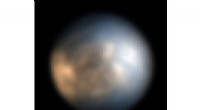
* Atmospheric Features: What we see on Jupiter are actually atmospheric features:
* Great Red Spot: This famous storm has raged for centuries and is larger than Earth.
* Bands and Zones: Jupiter's atmosphere has distinct bands of different colors caused by variations in cloud composition and wind patterns.
* Storms and Cyclones: The planet experiences massive storms and cyclones, which are visible as swirling patterns in its atmosphere.
So, while Jupiter might look like a giant ball with "land" features, it's all about the dynamic and ever-changing atmosphere.