What Objects Orbiting the Sun DO:
* Orbit the Sun: This is the defining characteristic. They follow a path around the Sun due to its gravitational pull.
* Experience Gravity: The Sun's gravity is the primary force holding them in their orbits.
* Move in Elliptical Paths: While most orbits are close to circular, they are technically elliptical, meaning they are slightly oval-shaped.
* Follow Kepler's Laws of Planetary Motion: These laws describe how objects move in their orbits and are fundamental to understanding planetary motion.
* Reflect Sunlight: They do not generate their own light but reflect sunlight, which is why we can see them.
* Experience Day and Night: The rotation of these objects on their axis, combined with their orbit around the Sun, causes day and night cycles.
What Objects Orbiting the Sun DON'T:
* Emit Their Own Light: They are not stars, so they don't generate light through nuclear fusion.
* Have a "Sun" of Their Own: They orbit the Sun, not another star.
Types of Objects Orbiting the Sun:
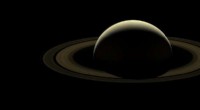
* Planets: The eight major planets (Mercury, Venus, Earth, Mars, Jupiter, Saturn, Uranus, and Neptune) are the largest and most well-known.
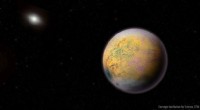
* Dwarf Planets: Objects like Pluto, Ceres, and Eris that are smaller than planets but still significant.
* Moons: While technically orbiting planets, these objects are indirectly orbiting the Sun as well.
* Asteroids: Rocky bodies found mainly in the asteroid belt between Mars and Jupiter.
* Comets: Icy bodies that have very elliptical orbits, often passing close to the Sun.
Important Note: There is a huge variety of objects orbiting the Sun, from the massive planets to tiny dust particles. The classification of objects is constantly being refined as our understanding of the solar system evolves.