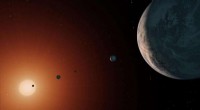
Long-Lived Stars (Red Dwarfs):
* Mass: Low mass (typically 0.08 to 0.5 times the mass of the Sun).
* Temperature: Cool and faint (surface temperatures around 2,500 to 3,500 Kelvin).
* Luminosity: Low luminosity, meaning they emit very little light and energy.
* Lifespan: Extremely long lifespans, potentially trillions of years.
* Fuel Consumption: Burn their hydrogen fuel very slowly due to their lower core temperatures and pressures.
* Evolution: They remain stable for a very long time, gradually cooling and becoming dimmer. They eventually turn into white dwarfs.
Short-Lived Stars (Blue Giants):
* Mass: High mass (typically 10 times the mass of the Sun or more).
* Temperature: Hot and bright (surface temperatures around 20,000 Kelvin or more).
* Luminosity: High luminosity, emitting a vast amount of light and energy.
* Lifespan: Relatively short lifespans, only millions or tens of millions of years.
* Fuel Consumption: Burn their hydrogen fuel very rapidly due to their high core temperatures and pressures.
* Evolution: They go through a series of stages, eventually becoming red supergiants, exploding as supernovas, and leaving behind neutron stars or black holes.
Key Comparisons:
* Mass: The most important factor determining a star's lifespan. More massive stars have shorter lifespans.
* Luminosity: Higher luminosity means faster fuel consumption, leading to a shorter lifespan.
* Temperature: Hotter stars have higher core pressures and temperatures, resulting in faster nuclear fusion and a shorter lifetime.
* Evolution: Long-lived stars evolve slowly and calmly, while short-lived stars have dramatic and explosive endings.
Why the Difference?
The fundamental reason for the difference in lifespans is the rate at which stars fuse hydrogen into helium in their cores. This process is driven by gravity and the star's internal pressure.
* Massive stars: Their strong gravity and high internal pressure cause rapid hydrogen fusion, burning through their fuel much faster.
* Low-mass stars: Their weaker gravity and lower internal pressure lead to a much slower rate of hydrogen fusion, allowing them to sustain themselves for billions or even trillions of years.
In essence: Long-lived stars are like the marathon runners of the cosmos, burning slowly and steadily, while short-lived stars are like the sprinters, burning brightly but fleetingly.