Here's what it states:
* The square of the orbital period of a planet is proportional to the cube of the semi-major axis of its orbit.
In simpler terms:
* The further a planet is from the Sun, the longer it takes to complete one orbit. This relationship is not linear, but rather a cube-square relationship.
Mathematically:
* T² ∝ a³
Where:
* T = orbital period (in years)
* a = semi-major axis (average distance from the Sun in astronomical units (AU))
Example:
* Earth has an orbital period of 1 year and a semi-major axis of 1 AU.
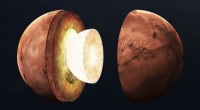
* Mars has an orbital period of 1.88 years and a semi-major axis of 1.52 AU.
* Notice that the ratio T²/a³ is approximately the same for both Earth and Mars, which confirms Kepler's Third Law.
This law revolutionized our understanding of planetary motion and provided a powerful tool for studying the solar system.