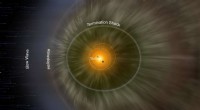
* Vast distances: The planets in our solar system are separated by huge distances. The space between them is enormous, making collisions incredibly unlikely.
* Orbital stability: Planets orbit the sun in relatively stable, predictable paths. These orbits are determined by gravity and are usually well-spaced, minimizing the chance of close encounters.
* Gravitational interactions: While planets can be influenced by the gravity of other planets, these interactions are usually subtle and don't lead to collisions. They can sometimes cause slight shifts in orbits, but not drastic ones.
However, there are scenarios where collisions could occur:
* Early solar system: During the formation of the solar system, billions of years ago, there were many more objects and debris orbiting the sun. Collisions were much more frequent then. Some scientists believe that the early Earth collided with a Mars-sized object, creating the moon.
* External forces: An outside force, like a passing star or a rogue planet, could disrupt the stability of a solar system, leading to collisions. This is very rare but possible.
* Close binary systems: In star systems with two stars close together, planets might have more chaotic orbits and an increased chance of colliding.
It's important to note that:
* Collisions are extremely rare: We have never directly observed a planet colliding with another planet in our solar system.
* Collisions have long-term consequences: If a collision did occur, it would have a devastating impact on the involved planets, likely destroying life and creating significant debris.
So, while planetary collisions are possible, they are extremely rare and unlikely in our current solar system. The vast distances and stable orbits of our planets make them quite safe.