* Tidal Locking: The Moon is tidally locked to Earth, meaning it rotates once on its axis for every orbit it makes around Earth. This synchronization means the same side of the Moon always faces us.
* Lunar Librations: While we always see the same side of the Moon, there are slight "wobbles" called librations that allow us to see a bit more than 50% of its surface over time. These librations are caused by the Moon's slightly elliptical orbit and the tilt of its rotational axis.
What We Can't See:
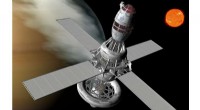
The far side of the Moon, also known as the "dark side of the Moon," remains hidden from our view. It wasn't until the Soviet Luna 3 mission in 1959 that humanity got its first glimpse of this unseen hemisphere.
How We See the Whole Moon:
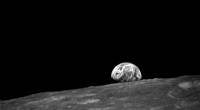
* Spacecraft: Missions like the Apollo missions and various lunar orbiters have provided us with comprehensive images of the entire lunar surface.
* Artificial Satellites: Spacecraft orbiting the Moon constantly send back detailed imagery, giving us a complete view.
So, while we can't see every angle of the Moon from Earth, we have a pretty good understanding of what it looks like thanks to the work of space exploration.