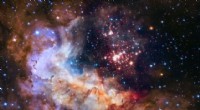
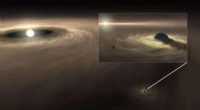
* Stars are formed from massive clouds of gas and dust. The amount of material that collapses to form a star determines its initial size.
* Stars have different masses. Stars with more mass are larger and hotter than stars with less mass.
* Stars evolve over time. As stars age, they change in size. Some stars, like our Sun, will eventually become red giants, which are much larger than they are now. Others, like massive stars, will explode as supernovas, leaving behind dense remnants called neutron stars or black holes.
In summary:
* Size: Stars come in a wide range of sizes, from tiny red dwarfs to massive supergiants.
* Mass: Larger stars are more massive than smaller stars.
* Evolution: Stars change in size and other characteristics throughout their lifetimes.
It's important to remember that the term "all-star" is a more general term. It can refer to different types of stars. So, while "all-stars" have different sizes, they might share some common characteristics like being very bright or having a particular spectral type.