However, we can pinpoint a few key moments in history that marked the beginning of systematic searches for exoplanets:
* 19th century: Astronomers like William Herschel theorized about the existence of "dark companions" to stars, based on their observations of stellar wobbles. These were the first attempts to detect planets indirectly by their gravitational influence.
* Early 20th century: The development of better telescopes and astrophysical theories allowed for more sophisticated calculations about the possibility of planets around other stars.
* 1990s: The first confirmed exoplanet was discovered in 1992, orbiting a pulsar. This marked a turning point and spurred intense research into exoplanet detection methods.
* 2000s: The development of ground-based telescopes like the Keck Observatory and space telescopes like Kepler significantly accelerated the pace of exoplanet discoveries.
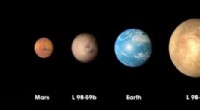
So, while the idea of other planets has existed for a long time, it's the past few decades that have seen a dedicated and successful search for exoplanets. Today, astronomers are not just looking for new planets, but also trying to understand their characteristics, atmospheres, and potential for life.