Gas:
* Hydrogen (H): The most abundant element in the universe, making up about 70% of a nebula's mass.
* Helium (He): The second most abundant element, composing about 28% of a nebula's mass.
* Other elements: These are present in smaller amounts, including:
* Oxygen (O)
* Carbon (C)
* Nitrogen (N)
* Neon (Ne)
* Iron (Fe)
* Silicon (Si)
* Sulfur (S)
* Magnesium (Mg)
Dust:
* Silicates: Similar to sand, these are tiny particles of rock-forming minerals like quartz and feldspar.
* Graphite and other carbon compounds: These are often present in the form of tiny grains.
* Ice: Water ice and other frozen molecules like methane (CH4) and ammonia (NH3) can be found in cold nebulae.
Other components:
* Cosmic rays: High-energy particles that can interact with the nebula's gas and dust.
* Magnetic fields: These can influence the movement of gas and dust within the nebula.
Here's a breakdown by nebula type:
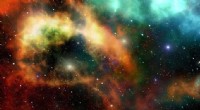
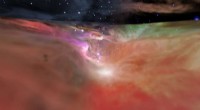
* Emission nebulae: These are glowing nebulae that emit light due to the ionization of their gas by nearby hot stars. They are primarily composed of hydrogen and helium, but other elements can also be present.
* Reflection nebulae: These nebulae reflect light from nearby stars, appearing blue due to the scattering of blue wavelengths. They are typically composed of dust particles.
* Dark nebulae: These are dense, opaque clouds of gas and dust that block light from background stars. They are composed of both gas and dust, with a higher concentration of dust than emission or reflection nebulae.
* Planetary nebulae: These are formed when a star like our sun sheds its outer layers as it reaches the end of its life. They are mostly composed of the star's ejected material, which includes a variety of elements heavier than hydrogen and helium.
The exact composition of a nebula can vary depending on its location, age, and other factors. Astronomers use telescopes and other instruments to study the composition of nebulae, helping us understand the processes of star formation and the evolution of the universe.