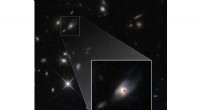
1. Interstellar Space:
* Extremely dark, but not completely black: It's not truly void, as it contains scattered dust, gas, and faint starlight. This faint light contributes to a very low level of brightness, but still much darker than Earth's night sky.
* Darker than Earth's night sky: Our night sky is illuminated by scattered sunlight and artificial light, making it much brighter than interstellar space.
* Darker than nebulae: Nebulae, despite being visually spectacular, are composed of dense clouds of gas and dust. They are brighter than interstellar space due to the higher concentration of matter, but still extremely dark compared to Earth's night sky.
2. Regions Darker than Interstellar Space:
* Voids: These are vast, empty regions of the universe, containing very little matter, including stars, gas, and dust. They are even darker than interstellar space due to the complete lack of light sources.
* Early universe: In the early universe, shortly after the Big Bang, there were no stars or galaxies. The universe was filled with a homogenous sea of hot, dense plasma, but there were no light sources to illuminate the surrounding space. This period was incredibly dark.
In conclusion: While interstellar space is incredibly dark, it's not the darkest region of the universe. Voids and the early universe are even darker due to the lack of light sources and matter.
Important Note: The darkness of space is not absolute. Even in the deepest voids, there is always some faint background light from the cosmic microwave background radiation, a remnant of the Big Bang. This light is extremely faint, but it represents the fundamental limit to the darkness of the universe.