* Light: The most obvious thing the Sun emits is light, which is a form of electromagnetic radiation. This includes visible light, which we can see, as well as invisible forms like infrared and ultraviolet radiation.
* Heat: The Sun also emits heat, which is another form of energy transfer. This is what keeps the Earth warm and allows life to thrive.
* Solar Wind: The Sun constantly emits a stream of charged particles called the solar wind. It travels outward from the Sun at high speeds, carrying with it magnetic fields and energy.
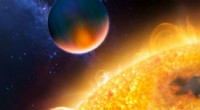
* Solar Flares: Occasionally, the Sun releases bursts of intense energy called solar flares. These can release huge amounts of radiation and charged particles, which can affect Earth's atmosphere and technology.
* Coronal Mass Ejections (CMEs): Similar to solar flares, CMEs are giant eruptions of plasma and magnetic fields that can be even more powerful. These events can have a significant impact on Earth, disrupting radio communications and power grids.
So, while the Sun doesn't shoot anything in the traditional sense, it does release a constant stream of energy and matter that plays a crucial role in our solar system.