While it's true that many of the first discovered exoplanets were close to their stars, this is primarily due to the limitations of the detection methods used at the time:
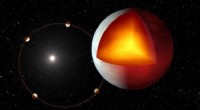
* Radial Velocity Method (Doppler Spectroscopy): This method relies on detecting the wobble of a star caused by the gravitational pull of an orbiting planet. This method is most effective for detecting large planets close to their stars, as they cause the most noticeable wobble.
* Transit Method: This method detects the slight dimming of a star's light when a planet passes in front of it. This method is also more sensitive to larger planets close to their stars, as they block a larger portion of the star's light.
However, more advanced techniques and ongoing missions have revealed that exoplanets exist at a wide range of distances from their stars, including far beyond the habitable zone.
Here are some reasons why we see a bias towards closer-in planets:
* Detection Bias: The methods used to detect exoplanets are more sensitive to planets close to their stars.
* Orbital Period: Planets closer to their stars have shorter orbital periods, which allows us to observe multiple transits or radial velocity variations in a shorter time.
* Formation and Evolution: Some theories suggest that planet formation is more likely in the inner regions of a protoplanetary disk, where material is denser.
In summary:
* We have discovered exoplanets at all distances from their stars, including far beyond the habitable zone.
* The initial bias towards closer-in planets is due to the limitations of early detection methods.
* Our understanding of exoplanet distribution is constantly evolving as new technologies and missions are deployed.
It's important to note that the statement "most extrasolar planets are found close to their parent stars" is an oversimplification and should be considered with caution.