Here's the breakdown:
* White Stars: These stars have a high surface temperature, typically around 10,000 Kelvin or more. They emit a broad spectrum of light, including all colors, which our eyes perceive as white.
* Blue Stars: These stars are even hotter than white stars, with surface temperatures exceeding 25,000 Kelvin. Their peak emission falls in the blue and ultraviolet regions of the electromagnetic spectrum, giving them a bluish appearance.
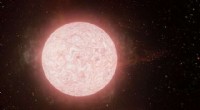
* Red Stars: These stars have the lowest surface temperatures, typically below 3,500 Kelvin. Their peak emission is in the red and infrared regions of the spectrum, hence their reddish color.
Why do some stars seem to change color?
The reason some stars appear to change color isn't due to the star itself changing its surface temperature. Instead, it's because of atmospheric conditions on Earth:
* Refraction: The Earth's atmosphere bends light as it passes through, especially during sunrise and sunset. This bending can make stars appear redder or even distorted.
* Scattering: Blue light is scattered more easily by the atmosphere than red light. This effect can make stars appear redder when they are low on the horizon, as their light has to travel through more atmosphere.
In summary:
* Star color is determined by its surface temperature: Hotter stars appear blue, while cooler stars appear red.
* Apparent color changes are due to atmospheric effects: These changes are not related to the star's actual temperature.
So, the next time you see a star twinkling with a changing color, remember that it's not the star itself changing, but rather our atmosphere playing tricks on our eyes!