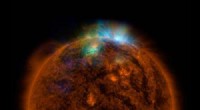
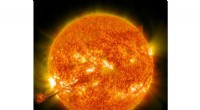
* It emits light and heat: Stars are giant balls of hot gas that produce their own light and heat through nuclear fusion. The Sun does exactly this.
* It's powered by nuclear fusion: In the Sun's core, hydrogen atoms fuse together to form helium, releasing tremendous amounts of energy in the process. This is the fundamental energy source for stars.
* It's massive: Stars need to be massive enough for their gravity to pull in and compress the gas, creating the extreme pressure and heat needed for fusion. The Sun is significantly more massive than planets.
* It's in hydrostatic equilibrium: This means the outward pressure from fusion in the Sun's core balances the inward pressure from gravity. This equilibrium keeps the Sun stable and prevents it from collapsing or exploding.
Essentially, the Sun is a star because it's a giant ball of hot gas that produces its own light and heat through nuclear fusion. It's the same process that powers all the other stars we see in the night sky.
It's important to remember that the Sun is just one star among billions in the Milky Way galaxy, and there are countless more stars in other galaxies. While the Sun is our closest star, it's not unique in its fundamental properties.