1. Supernova Explosions:
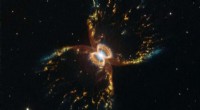
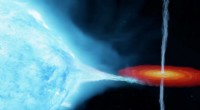
* The most common way for a nebula to form is through the explosive death of a massive star (a supernova).
* When a star much larger than our Sun runs out of fuel, its core collapses violently, releasing immense energy and shockwaves.
* These shockwaves push outwards, compressing and triggering the collapse of nearby interstellar gas and dust, creating a nebula.
2. Stellar Winds:
* Even smaller stars, like our Sun, produce stellar winds, which are streams of charged particles flowing outward.
* These winds can also push and compress interstellar gas and dust, leading to the formation of nebulae.
3. Collisions:
* When two or more galaxies collide, the gravitational forces can disrupt the gas and dust within, forming large-scale nebulae.
Types of Nebulas:
* Emission Nebula: These nebulae glow brightly because their gases are excited by the radiation of nearby hot stars. The most famous example is the Orion Nebula.
* Reflection Nebula: These nebulae reflect the light of nearby stars, appearing blue due to scattering.
* Dark Nebula: These nebulae are so dense that they block the light of stars behind them, appearing as dark patches against the background of the Milky Way.
Evolution of Nebulae:
* Nebulae are not static objects. They are constantly evolving, with gravity pulling the gas and dust together to form new stars.
* Over time, the gas and dust within a nebula will be used up, and the nebula will disappear.
* However, some nebulae may be reborn through the death of newly formed stars, continuing the cycle of star formation.
In Summary:
Nebulas are beautiful and dynamic celestial objects that are essential for the formation of stars. They are formed by supernova explosions, stellar winds, and galactic collisions. They come in various types and undergo continuous evolution. Understanding nebulae helps us learn about the life cycle of stars and the evolution of galaxies.