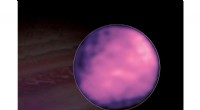
* Jupiter is a gas giant: It is primarily composed of hydrogen and helium, with no solid surface. Any spacecraft that tries to land would simply sink into the thick atmosphere.
* Extreme atmospheric conditions: Jupiter has a very turbulent atmosphere with strong winds, lightning storms, and intense pressure that would crush any spacecraft or human.
* Radiation belts: Jupiter has powerful radiation belts that would be deadly to humans and could damage electronic equipment.
While we haven't been able to physically land on Jupiter, we have sent numerous spacecraft to explore it. These missions have provided us with valuable data about the planet's atmosphere, composition, and moons.
Instead of landing, future missions to Jupiter might focus on:
* Orbiting the planet: This allows for long-term observation and data collection.
* Sending probes into the atmosphere: This can provide information about the planet's composition and weather patterns.
* Exploring Jupiter's moons: Some of Jupiter's moons, like Europa and Ganymede, are thought to have potential for harboring life.
So, while we might not be able to walk on Jupiter, exploring it from afar and through robotic probes is still a fascinating and important endeavor for our understanding of the solar system.