Which planets can you see?
* Mercury: Difficult to see due to its proximity to the sun. Requires a clear sky and a good telescope.
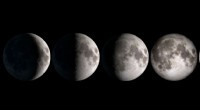
* Venus: Very bright and easy to spot, even without a telescope. With a telescope, you can see phases like the moon.
* Mars: Appears reddish and can be seen with the naked eye under good conditions. A telescope will reveal surface details and sometimes even its polar ice caps.
* Jupiter: A giant gas planet easily visible as a bright, yellowish object. A telescope shows its four largest moons and sometimes even cloud bands.
* Saturn: Known for its iconic rings. Even a small telescope will show the rings, and larger telescopes reveal more detail.
* Uranus: Faint and greenish, visible with a telescope but difficult to see with the naked eye.
* Neptune: Very faint, requires a good telescope and dark skies for observation.
Important factors:
* Telescope size and quality: Larger telescopes with better optics provide clearer views and more detail.
* Location: Light pollution from cities makes it harder to see faint objects. Dark skies are essential for observing planets.
* Seeing conditions: Turbulence in the atmosphere can distort views. Clear, stable air is ideal.
Tips for viewing planets:
* Use a star chart or app: These tools can help you locate planets in the sky.
* Start with bright planets: Venus, Jupiter, and Saturn are easiest to find.
* Be patient: It may take time to adjust your eyes to the darkness and find the planet.
* Don't expect too much: Planets won't look like photos from space probes. But you can still see fascinating details.
In summary, seeing planets with a telescope is possible, but it requires the right tools, location, and a bit of effort. But the reward is a glimpse into the wonders of our solar system!