Here's why:
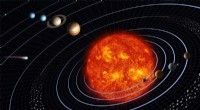
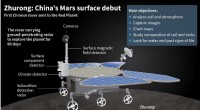
* Mars: While Mars is the closest candidate, it lacks a substantial atmosphere and a global magnetic field, leaving it exposed to harsh solar radiation. Its surface water is mostly frozen, and temperatures are extremely cold.
* Venus: Venus has a thick, toxic atmosphere with runaway greenhouse effect, leading to surface temperatures hot enough to melt lead.
* Mercury: Mercury is extremely close to the sun, making it incredibly hot and lacking any significant atmosphere.
* Outer Planets: The gas giants Jupiter, Saturn, Uranus, and Neptune have no solid surface and are composed primarily of gas. Their moons are mostly too small and cold to support life as we know it.
While we haven't found any habitable planets within our solar system, the search for life beyond Earth continues with missions exploring Mars, Europa (a moon of Jupiter), and other promising celestial bodies.