Here's why:
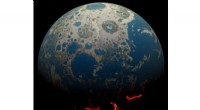
* Giant Impact Hypothesis: This theory proposes that the Moon formed from a collision between Earth and a Mars-sized object. The debris from this impact coalesced into the Moon. The similarity in composition between the Earth's outer layers and the Moon is consistent with this scenario, as the impact would have ejected material from Earth's crust and mantle.
Let's consider why other theories are less supported by this discovery:
* Capture Theory: This theory suggests the Moon formed independently and was later captured by Earth's gravity. It doesn't explain the similar composition.
* Co-formation Theory: This theory proposes the Moon and Earth formed simultaneously from the same protoplanetary disk. While it could potentially explain some similarities, it doesn't account for the different isotopic ratios found in some elements on the Moon and Earth.
In conclusion, the composition similarity between the Moon and Earth's outer layers provides strong evidence for the Giant Impact Hypothesis.