Natural Objects:
* Stars: These are giant balls of hot gas that emit light and heat.
* Planets: These are large celestial bodies that orbit a star. Some planets, like Venus and Jupiter, are bright enough to be seen with the naked eye.
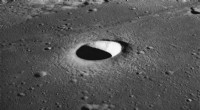
* The Moon: Our natural satellite, reflecting sunlight.
* Meteors (Shooting Stars): Small particles of dust and rock that burn up in the Earth's atmosphere.
* Comets: Icy bodies that orbit the sun and leave a trail of dust and gas.
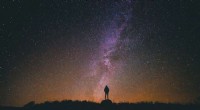
* Galaxies: Vast collections of stars, gas, and dust. The Milky Way, our own galaxy, is visible in the night sky as a faint band of light.
* Constellations: Groups of stars that form recognizable patterns in the sky.
Man-made Objects:
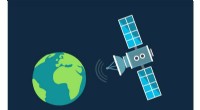
* Satellites: Artificial objects that orbit the Earth. You might see them as bright, moving points of light.
* Space Stations: Larger, manned spacecraft that orbit the Earth.
To see these objects, you need a dark sky away from light pollution. You can also use binoculars or a telescope for a better view!