Objects:
* Supernovae: If a massive star explodes within a certain distance from Earth, the intense radiation and blast waves could significantly disrupt Earth's atmosphere and potentially cause mass extinction events. Fortunately, the closest known candidates for supernova are still quite far away.
* Gamma-ray bursts (GRBs): These are the most powerful explosions in the universe, lasting from fractions of a second to minutes. While extremely rare, a GRB directly aimed at Earth could significantly impact our atmosphere and surface, potentially causing widespread damage.
* Rogue planets: These are planets that have been ejected from their star systems and wander through the galaxy. While unlikely to directly collide with Earth, a close encounter could significantly disrupt the orbits of objects in our solar system, potentially leading to catastrophic impacts.
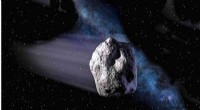
* Interstellar asteroids and comets: These objects come from outside our solar system and can potentially collide with Earth. While relatively infrequent, such collisions could be devastating.
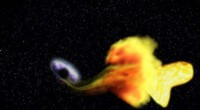
* Black holes: While supermassive black holes at galactic centers are likely far enough away to not directly threaten us, smaller, wandering black holes are a possibility. However, their direct interaction with Earth is extremely improbable.
Processes:
* Galactic tides: The gravitational pull of the Milky Way's central bulge can cause minor perturbations in the orbits of objects in our solar system, though unlikely to have significant effects on Earth.
* Dark matter: This mysterious substance comprises the majority of the universe's matter. While its precise nature is unknown, it could influence the structure and evolution of our galaxy, potentially affecting the stability of our solar system over long periods.
* Cosmic rays: These high-energy particles originate from outside our solar system and constantly bombard Earth. While most are deflected by our magnetic field, some can penetrate the atmosphere and have a potential impact on our climate and biological systems.
It's important to note:
* The likelihood of any of these events directly impacting Earth within our lifetime is incredibly small.
* Scientists are constantly monitoring the universe for potentially dangerous objects and processes.
* Understanding these celestial threats helps us plan for the future and potentially mitigate their impact.
Overall, while the universe is vast and harbors numerous potential dangers, Earth is relatively safe within its own solar system. Nevertheless, it's essential to be aware of the potential threats from beyond and continue to explore the mysteries of the cosmos.