Here's why:
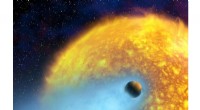
* Mass: Supernovae are caused by the catastrophic collapse of massive stars (typically 8-50 times the mass of our Sun). Red giants are simply evolved stars that have exhausted their core hydrogen fuel and have expanded dramatically. They are not massive enough to become supernovae.
* Fate: Red giants will eventually shed their outer layers, forming a planetary nebula, and leave behind a dense, hot core called a white dwarf.
Here's a breakdown of stellar evolution based on mass:
* Low-mass stars (like our Sun): These stars evolve into red giants, then shed their outer layers to become white dwarfs.
* Intermediate-mass stars: These stars also become red giants, but they might undergo a brief period of instability as they shed their outer layers, resulting in a planetary nebula. They ultimately leave behind a white dwarf.
* High-mass stars: These stars become red supergiants, and eventually collapse and explode as a supernova. They leave behind a neutron star or, in the case of the most massive stars, a black hole.
So, while red giants are part of the stellar evolution process, they are not massive enough to end in a supernova.