Here's a breakdown:
1. Main Sequence: A star spends the majority of its life fusing hydrogen into helium in its core, a process called the proton-proton chain reaction. This phase is known as the main sequence phase.
2. Red Giant: Once the hydrogen fuel in the core is exhausted, the core contracts and heats up. This causes the outer layers of the star to expand and cool, turning the star into a red giant.
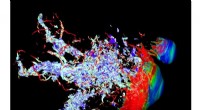
3. Helium Flash: As the core continues to heat up, it eventually reaches a temperature of about 100 million Kelvin. At this temperature, helium nuclei begin to fuse into carbon in a process called triple-alpha process. This fusion process happens explosively, releasing a tremendous amount of energy in a very short period. This event is known as the helium flash.
Important Notes:
* The helium flash only occurs in stars with masses between about 0.5 and 2 solar masses.
* The flash is so rapid that it doesn't cause any significant changes to the star's outer layers.
* After the helium flash, the star stabilizes and enters a phase where it fuses helium into carbon in its core, eventually leading to the formation of a horizontal branch star.
Let me know if you have any other questions!