1. The Sun Becomes a Red Giant:
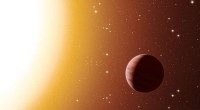
* In about 5 billion years, the Sun will run out of hydrogen fuel in its core. It will start burning helium, causing it to expand dramatically into a red giant.
* The Sun will engulf Mercury and Venus, and potentially Earth, making them uninhabitable.
* Mars might be spared from direct engulfment, but it would become incredibly hot and irradiated, losing any atmosphere it has.
2. The Sun Ejects Its Outer Layers:
* After becoming a red giant, the Sun will eventually shed its outer layers, forming a planetary nebula.
* This would leave behind a white dwarf, a dense and hot stellar remnant, about the size of Earth.
3. Planets Left in the Cold and Dark:
* Without the Sun's heat and light, all remaining planets will freeze and become dark and lifeless.
* The outer planets like Jupiter, Saturn, Uranus, and Neptune would likely be affected less drastically due to their distance from the Sun. However, they would still experience significant temperature drops.
* The planets would also lose their atmospheres as the solar wind weakens and cannot hold them in place.
4. The White Dwarf Cools Down:
* The remaining white dwarf will gradually cool and dim over billions of years, eventually becoming a black dwarf, a cold and dark stellar remnant.
In Summary:
The death of the Sun would be a slow but inevitable process, leading to the destruction of the inner planets and a gradual freezing of the outer planets. The solar system would become a cold and dark place, with only the remnants of the Sun's former glory remaining.
Note: This is a simplified explanation. The precise effects of the Sun's death on each planet are complex and subject to ongoing scientific research.