1. Fuel Consumption and Lifespan:
* Massive stars: Burn through their hydrogen fuel much faster due to higher core temperatures and pressures. This makes them live short, intense lives.
* Low-mass stars: Burn fuel slowly, leading to very long lifespans (billions of years).
2. Nuclear Fusion Processes:
* Massive stars: Are able to fuse heavier elements (carbon, oxygen, silicon, etc.) after hydrogen runs out, experiencing multiple stages of nuclear fusion.
* Low-mass stars: Primarily fuse hydrogen into helium, eventually becoming red giants and then white dwarfs.
3. Stellar Remnants:
* Stars with mass < 8 solar masses: End their lives as white dwarfs, the dense remnants of their core after shedding their outer layers.
* Stars with mass 8-25 solar masses: Collapse into neutron stars, incredibly dense objects composed of neutrons.
* Stars with mass > 25 solar masses: Explode as supernovae, leaving behind either a neutron star or a black hole, the most dense objects known.
Specific Examples:
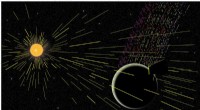
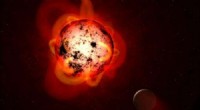
* Our Sun (1 solar mass): Will eventually become a red giant, then shed its outer layers, leaving behind a white dwarf.
* Betelgeuse (20 solar masses): A massive star that is expected to explode as a supernova in the next few thousand years.
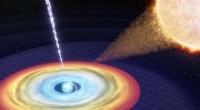
* Cygnus X-1 (15 solar masses): A black hole formed from the core of a massive star.
In Summary:
* Mass dictates the star's lifespan: Massive stars live fast and die young, while low-mass stars have long lifespans.
* Mass determines the type of nuclear fusion: Massive stars undergo multiple fusion stages, while low-mass stars mainly fuse hydrogen.
* Mass decides the final fate: Low-mass stars end as white dwarfs, while massive stars end as neutron stars or black holes.
The relationship between mass and the end stages of stars is a key concept in understanding the evolution of stars and the universe as a whole.