Here's why stars are predominantly made of hydrogen and helium:
* The Big Bang: The Big Bang, the event that started our universe, produced a vast amount of hydrogen and helium, making them the most abundant elements in the universe.
* Nuclear Fusion: Stars generate energy through nuclear fusion, a process where hydrogen atoms fuse together to form helium. This process releases immense amounts of energy, making stars shine.
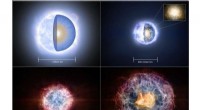
* Stellar Evolution: As stars evolve, they can fuse heavier elements from helium, but hydrogen and helium remain the dominant elements throughout a star's life cycle.
Therefore, stars inherit their composition from the nebulae they formed from, which are themselves rich in hydrogen and helium due to the conditions of the early universe. The fusion process within stars further reinforces this hydrogen and helium dominance.