1. Parallax:
* This method works for relatively close nebulae within our galaxy (up to a few thousand light-years).
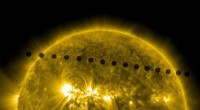
* Astronomers observe a nebula from two points in Earth's orbit, six months apart.
* The slight shift in the nebula's apparent position against the background stars (due to Earth's movement) reveals the distance using trigonometry.
2. Standard Candles:
* Certain objects, like Cepheid variable stars and Type Ia supernovae, have known intrinsic brightness (luminosity).
* By comparing their apparent brightness (how bright they appear from Earth) to their actual brightness, astronomers can calculate the distance.
* Nebulae often contain these standard candles, allowing for distance estimation.
3. Spectroscopic Parallax:
* Nebulae emit light with specific wavelengths, revealing their chemical composition and temperature.
* By analyzing the spectral lines, astronomers can determine the nebula's luminosity class.
* Comparing this to the nebula's apparent brightness gives an estimate of its distance.
4. Redshift:
* This method works for distant nebulae, particularly those outside our galaxy.
* The expansion of the universe causes light from distant objects to shift towards longer wavelengths (redshift).
* The amount of redshift is proportional to the distance, allowing astronomers to estimate the distance to the nebula.
5. Other Methods:
* For certain nebulae, other techniques are used, like:
* HII region distances: Estimating the distance based on the properties of ionized hydrogen gas within the nebula.
* Distance to the host galaxy: For nebulae within a galaxy, the distance to the galaxy itself can be used as an approximation.
Challenges and Limitations:
* Each method has its limitations and uncertainties.
* Parallax is only useful for nearby objects.
* Standard candles can be affected by dust and gas in the interstellar medium, affecting the accuracy.
* Redshift measurements can be complex and rely on cosmological models.
In summary, measuring distances to nebulae is a multi-faceted and challenging task. Astronomers use a variety of techniques, each with its own strengths and weaknesses, to arrive at the most accurate distance estimate.