1. Expanding Our View of the Universe:
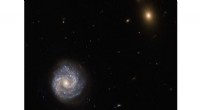
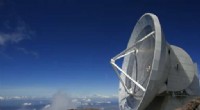
* Observation of celestial objects: Telescopes allow us to see objects in space that are too faint or distant to be observed with the naked eye. This has enabled us to study planets, stars, galaxies, nebulae, and other celestial phenomena in detail.
* Understanding the scale of the universe: Telescopes revealed the vastness of the universe, showing that our solar system is just a tiny part of a much larger cosmic structure.
* Discovering new celestial bodies: Telescopes have been instrumental in discovering new planets, asteroids, comets, and other celestial bodies.
2. Guiding Space Missions:
* Target selection: Telescopic observations help scientists identify potential targets for space missions, like promising planets to explore or interesting astronomical phenomena to investigate.
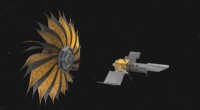
* Mission planning: Data from telescopes informs mission planning, including trajectory calculations, instrument design, and mission objectives.
* Understanding potential hazards: Telescopes help map asteroid fields and other potential hazards to spacecraft.
3. Studying the Nature of Objects:
* Composition and structure: Telescopes allow scientists to study the composition and structure of celestial objects by analyzing their light and other emissions.
* Atmospheric composition: Telescopes help determine the atmospheric composition of planets, moons, and other celestial bodies.
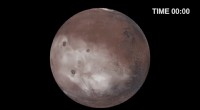
* Surface features: Telescopes provide detailed images of the surface features of planets, moons, and asteroids.
4. Understanding Cosmic Processes:
* Star formation and evolution: Telescopes allow scientists to observe the birth and death of stars, providing valuable insights into stellar evolution.
* Galaxy formation and evolution: Telescopes help study the formation and evolution of galaxies, shedding light on the structure and history of the universe.
* Black hole dynamics: Telescopes play a crucial role in studying black holes, their properties, and their influence on surrounding matter.
5. Inspiring Future Exploration:
* Public fascination: The stunning images and discoveries made possible by telescopes have captivated the public imagination and inspired generations to pursue careers in space exploration.
* Technological advancement: The development of telescopes has driven technological advancements that have also benefited other fields, such as medicine, communications, and materials science.
The telescope's impact on space exploration is immeasurable. It has transformed our understanding of the universe and continues to guide our journey into the cosmos.