Unique Environments:
* Microgravity: Space provides a unique microgravity environment, allowing researchers to study how organisms and materials behave without the influence of Earth's gravity. This has implications for understanding fundamental physics, developing new technologies, and even improving human health.
* Vacuum of Space: The vacuum of space offers a pristine environment for studying the cosmos, free from atmospheric interference. This enables astronomers to observe distant objects and phenomena that are obscured by Earth's atmosphere.
* Extreme Conditions: Space offers a range of extreme conditions, such as intense radiation, extreme temperatures, and the absence of a magnetic field. These conditions can be used to test the limits of materials and technologies, leading to advancements in various fields.
New Discoveries:
* Astronomy & Astrophysics: Space-based observatories allow us to see further and more clearly into the universe than ever before, leading to groundbreaking discoveries about the origins and evolution of stars, galaxies, and the universe itself.
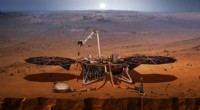
* Planetary Science: Missions to other planets and celestial bodies provide valuable information about their composition, geology, and potential for life. This helps us understand the formation and evolution of our solar system and the possibility of life beyond Earth.
* Earth Science: Observing Earth from space allows scientists to study global processes like climate change, ocean currents, and plate tectonics. This information is crucial for addressing environmental challenges and improving our understanding of our planet.
Technological Advancements:
* Materials Science: The extreme conditions of space can accelerate material degradation, forcing researchers to develop new, more resilient materials for spacecraft and future space infrastructure.
* Space Exploration Technologies: Developing technologies for space exploration, such as propulsion systems, life support systems, and communication networks, often leads to spin-offs that benefit society on Earth.
Inspiration and Education:
* Human Curiosity: Space exploration fuels our innate curiosity about the universe and our place within it.
* Public Engagement: Space missions often capture the imagination of the public, inspiring future generations to pursue careers in science and technology.
* International Collaboration: Space research often involves collaboration between scientists and engineers from different countries, fostering international cooperation and scientific advancement.
Overall, scientific research in space offers a unique opportunity to explore the universe, understand fundamental laws of nature, and advance our technological capabilities, ultimately contributing to a better future for humanity.