Here's a breakdown:
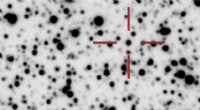
* Apparent Magnitude: This is a measure of how bright a star appears to be from Earth. It's a historical scale, with smaller numbers representing brighter stars.
* The brightest stars have negative apparent magnitudes.
* The faintest stars visible to the naked eye have apparent magnitudes around +6.
* Telescopes can detect stars with much fainter apparent magnitudes.
* Factors Affecting Apparent Magnitude:
* Intrinsic Luminosity: The actual amount of light a star emits. Brighter stars naturally appear brighter.
* Distance: Stars that are closer to Earth appear brighter, even if they are intrinsically fainter.
* Interstellar Extinction: Dust and gas in space absorb some of the light from distant stars, making them appear fainter.
Important Distinction:
* Apparent Magnitude: How bright a star appears from Earth.
* Absolute Magnitude: The brightness a star would have if it were located 10 parsecs (32.6 light-years) away. This is a measure of the star's true intrinsic luminosity.
So, when you're looking at the stars, you're seeing their apparent magnitudes, a combination of their intrinsic brightness and their distance from Earth.