1. Telescopes:
* Optical telescopes: These are the most familiar type, gathering visible light. They come in various sizes, from backyard telescopes to massive observatory instruments like the Hubble Space Telescope.
* Radio telescopes: These detect radio waves emitted by celestial objects. They often work in arrays, combining signals from multiple dishes to achieve higher resolution.
* Infrared telescopes: These detect infrared radiation, which can penetrate dust clouds and reveal hidden objects. Examples include the Spitzer Space Telescope and the James Webb Space Telescope.
* Ultraviolet telescopes: These detect ultraviolet radiation, which is emitted by hot, young stars.
* X-ray telescopes: These detect X-rays, which are emitted by extremely hot objects like black holes and neutron stars.
* Gamma-ray telescopes: These detect the highest-energy radiation, originating from powerful events like supernova explosions and active galactic nuclei.
2. Spacecraft:
* Orbiting observatories: Telescopes like Hubble are placed in orbit to avoid atmospheric distortion and offer a clearer view.
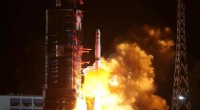
* Probes: These spacecraft fly past, orbit, or land on celestial bodies to collect data. Examples include the Voyager missions, the Mars rovers, and the Juno mission to Jupiter.
* Particle detectors: These instruments measure cosmic rays and other particles traveling through space.
3. Computer Modeling and Simulations:
* Computer simulations: Scientists use powerful computers to create simulations of physical processes in the universe, helping them to understand complex phenomena.
* Data analysis: Large amounts of data from telescopes and spacecraft are analyzed using sophisticated software to extract meaningful information.
4. Theoretical Research:
* Mathematical models: Scientists develop mathematical models to describe the behavior of the universe and its components.
* Theoretical predictions: These models help to predict the existence of new objects and phenomena, which can then be tested through observations.
5. Collaboration and Communication:
* International collaboration: Scientists from around the world work together on large-scale projects.
* Scientific publications: Results of research are published in peer-reviewed journals and presented at conferences.
What Scientists Study:
* Origin and evolution of the universe: Studying the Big Bang, cosmic microwave background radiation, and the formation of galaxies and stars.
* Composition and properties of celestial objects: Analyzing stars, planets, nebulae, black holes, and other celestial objects.
* Laws of physics in the universe: Testing and refining our understanding of fundamental physical laws like gravity and relativity.
* Search for life beyond Earth: Looking for signs of life on other planets and moons.
Scientists are constantly developing new tools and techniques to explore the universe. Their work has revolutionized our understanding of the cosmos and continues to reveal new and astonishing discoveries.