1. Above the Atmosphere:
* Clearer View: Hubble orbits above Earth's atmosphere, which distorts and scatters light. This eliminates the "twinkling" effect we see from the ground, giving Hubble a much clearer view of space.
* Full Spectrum Access: The atmosphere absorbs certain wavelengths of light, especially those in the ultraviolet and infrared. Hubble can observe these wavelengths directly, revealing information unavailable to ground-based telescopes.
2. Advanced Technology:
* Sharper Mirrors: Hubble's primary mirror is incredibly precise, with a diameter of 2.4 meters (7.9 feet). Its shape is carefully maintained, ensuring the light from distant objects is focused perfectly.
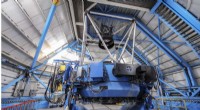
* Adaptive Optics: While Hubble doesn't use adaptive optics, land-based telescopes can use this technology to compensate for atmospheric distortions in real time. This allows ground-based telescopes to achieve sharper images than they could otherwise.
3. Constant Observation:
* Uninterrupted View: Hubble's orbit allows it to continuously observe objects without the interruptions caused by weather, daylight, and atmospheric turbulence that affect land-based telescopes.
4. Accessibility:
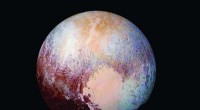
* Reachable Targets: Hubble can observe objects that are inaccessible from Earth, including distant galaxies, nebulae, and objects in the outer solar system.
It's important to note that ground-based telescopes have also made significant advancements:
* Larger Mirrors: Ground-based telescopes have been built with much larger primary mirrors, allowing them to gather more light and produce even sharper images than Hubble.
* Adaptive Optics: As mentioned earlier, adaptive optics has revolutionized ground-based astronomy, significantly reducing the effects of atmospheric distortion.
In summary, while Hubble's position above the atmosphere gives it a significant advantage, ground-based telescopes are constantly advancing in technology and are capable of producing increasingly impressive images. The future of astronomy lies in both space-based and ground-based observatories, working together to explore the universe in unprecedented detail.