Low-Mass Stars (Less than 0.8 solar masses)
* Main Sequence: They spend most of their lives fusing hydrogen into helium in their core, similar to the Sun. This phase can last for billions of years.
* Red Giant: Once hydrogen fuel runs out in the core, the star expands into a red giant. Helium fusion begins in a shell around the core, and the star becomes cooler and larger.
* Helium Flash: The core temperature and pressure rise until helium ignites explosively, causing a rapid expansion and contraction of the star.
* Horizontal Branch: The star settles into a stable state, fusing helium in its core. This phase is relatively short.
* Asymptotic Giant Branch: Helium fuel in the core runs out, and the star expands again into an even larger red giant. Hydrogen fusion occurs in a shell around the core.
* Planetary Nebula: The outer layers of the star are ejected into space, creating a colorful planetary nebula.
* White Dwarf: The core of the star remains as a dense, hot white dwarf. This object slowly cools over billions of years.
High-Mass Stars (More than 8 solar masses)
* Main Sequence: They fuse hydrogen into helium much faster than low-mass stars, lasting only millions of years. They are also hotter and brighter.
* Supergiant: After hydrogen fusion in the core ends, the star expands into a supergiant. It then fuses heavier elements like carbon, oxygen, silicon, and even iron.
* Supernova: Once the star reaches the iron core, fusion cannot produce energy anymore. The core collapses catastrophically, leading to a supernova explosion.
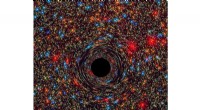
* Neutron Star or Black Hole: Depending on the mass of the star, the supernova remnant can either be a dense, spinning neutron star or a black hole.
Key Differences:
* Lifetime: Low-mass stars have much longer lifespans than high-mass stars.
* Fuel Consumption: High-mass stars burn through their fuel much faster.
* Death: Low-mass stars end their lives as white dwarfs, while high-mass stars die as neutron stars or black holes.
* Element Production: High-mass stars are responsible for creating heavier elements through fusion, contributing to the chemical enrichment of the universe.
In Summary: The main difference between low-mass and high-mass star life cycles is their mass. This affects their lifetime, fuel consumption rate, and ultimate fate. High-mass stars live fast and die young, leaving behind dramatic remnants, while low-mass stars live long lives and end as relatively simple white dwarfs.