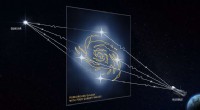
Types of Astronomical Markers:
* Stonehenge: A prehistoric monument in England, believed to have been used for observing solstices and equinoxes.
* Ancient Egyptian Pyramids: Oriented to align with specific stars, potentially for religious purposes.
* Sunken stone circles: These structures, found around the world, were likely used for observing the sun's position in the sky.
* Standing Stones: Single or clustered stones arranged in patterns, some believed to mark significant astronomical events.
* Observatories: Modern structures equipped with telescopes and other instruments for studying celestial objects.
* Astrological Charts: Diagrams that depict the positions of celestial bodies at a specific time, used for interpreting their influence.
Functions of Astronomical Markers:
* Timekeeping: Tracking the passage of time, including days, months, and years, based on celestial cycles.
* Navigation: Using celestial bodies for determining direction and location.
* Religious and Spiritual Practices: Connecting with the divine through observations of the cosmos.
* Scientific Research: Collecting data and studying celestial phenomena.
* Cultural Identity: Expressing cultural beliefs and values through astronomical observations.
Examples of Astronomical Markers:
* The Gnomon: A simple tool used to measure the height of the sun in the sky, often found in ancient cultures.
* The Armillary Sphere: A model of the celestial sphere that was used for visualizing and measuring celestial positions.
* The Meridian Line: A line marking the north-south direction, used to observe the sun's position at noon.
Significance of Astronomical Markers:
Astronomical markers provide evidence of early human understanding of the cosmos, their connection to the natural world, and the development of sophisticated knowledge systems. They reveal fascinating insights into the history of astronomy, culture, and belief systems across different civilizations.