Here's a breakdown:
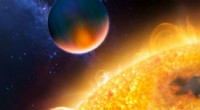
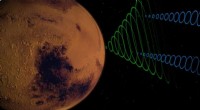
* Planets: These are the eight major celestial bodies that orbit the Sun: Mercury, Venus, Earth, Mars, Jupiter, Saturn, Uranus, and Neptune. They are large enough to have cleared their neighborhood of other objects through their gravitational influence.
* Dwarf Planets: These are smaller than planets and haven't cleared their orbital paths. Some well-known dwarf planets include Pluto, Ceres, Eris, Makemake, and Haumea.
* Asteroids: These are rocky bodies that orbit the Sun, mainly found in the asteroid belt between Mars and Jupiter.
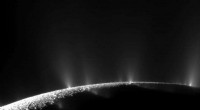
* Comets: These are icy bodies that orbit the Sun in highly elliptical paths. When they get close to the Sun, their ice vaporizes, creating a tail of gas and dust.
* Meteoroids: These are small rocky or metallic bodies that orbit the Sun. They are much smaller than asteroids. When a meteoroid enters the Earth's atmosphere, it burns up and becomes a meteor or shooting star.
* Dust: This is a collective term for tiny particles of rock and ice that orbit the Sun.
All these bodies are part of the Solar System, which is centered around the Sun.