Nebulae: The Birthplace of Stars
* What they are: Nebulae are vast clouds of gas and dust in space. They are the raw material from which stars are formed.
* How they form: Nebulae can arise from the remnants of dying stars (supernovae) or from the collision of galaxies.
* Star Formation: Within nebulae, gravity pulls together denser regions of gas and dust. As these regions collapse, they heat up, eventually igniting nuclear fusion and forming a star.
Pulsars: The Remnants of Massive Stars
* What they are: Pulsars are rapidly rotating neutron stars. They are incredibly dense, with a mass comparable to the Sun packed into a sphere only a few kilometers across.
* How they form: Pulsars are formed when massive stars (at least 8 times the mass of our Sun) run out of fuel and collapse. The core collapses to form a neutron star, and the outer layers are violently ejected in a supernova explosion.
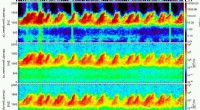
* The Pulsar's Pulse: Pulsars emit beams of radiation from their magnetic poles. As they spin, these beams sweep across space, making them appear to "pulse" from our perspective.
The Link Between Nebulae and Pulsars
* Nebulae give birth to stars that become pulsars: The massive stars that eventually become pulsars are born within nebulae.
* Supernovae create new nebulae: The supernova explosion that forms a pulsar also disperses the star's outer layers into space, creating a new nebula.
* Nebulae can be enriched by pulsar winds: Pulsars emit powerful winds of particles, which can interact with the gas and dust in nearby nebulae, potentially contributing to the formation of new stars.
What Scientists Can Infer
* The cyclical nature of star formation: The process of star formation within nebulae and the eventual death of massive stars in supernovae creates a cyclical relationship. The death of a star (creating a pulsar and a new nebula) provides the ingredients for the birth of new stars.
* The evolution of matter in the universe: The interplay of nebulae and pulsars demonstrates how matter is constantly recycled and transformed in the universe. This cycle is essential for the creation of new stars, planets, and even life.
* The distribution of heavy elements: Supernovae, the events that form pulsars, are responsible for the distribution of heavy elements in the universe. These elements, forged in the intense heat of the stellar core, are dispersed into space, enriching future generations of stars and planets.
In Summary
Nebulae are the birthplaces of stars, including those that eventually become pulsars. The death of a massive star in a supernova explosion creates both a pulsar and a new nebula, setting the stage for a new cycle of star formation and the continued evolution of the universe.